
FAQ
Answers to the questions we hear most about drone inspections of wind turbines: from planning and downtime to reports, data and LPS measurements.
General
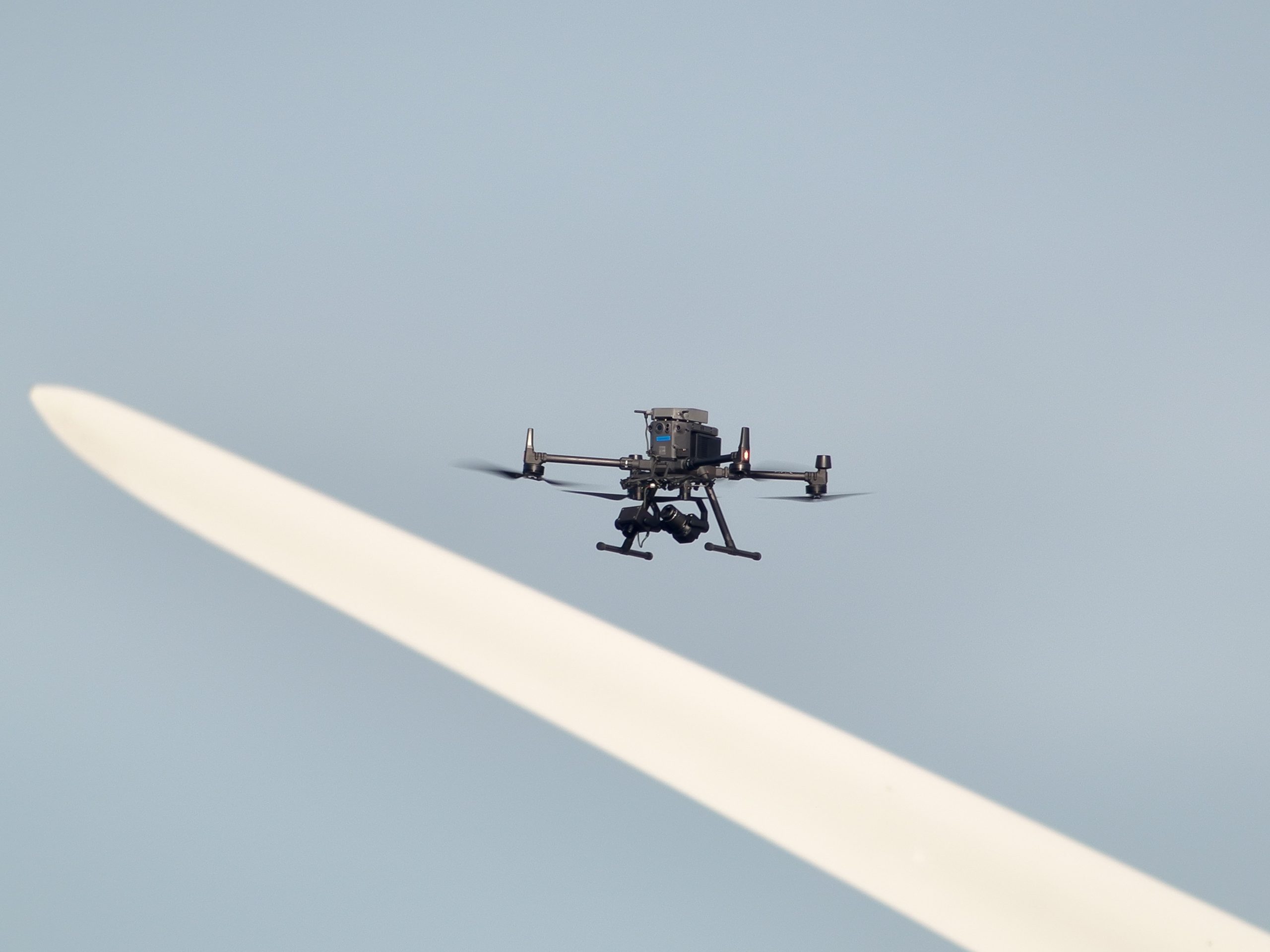
A drone flies a fixed route around a stopped wind turbine and photographs all four sides of every blade in high resolution. LiDAR keeps the drone at a constant distance and records the exact position of every photo, so each defect can be located, sized and classified.
Blade inspections, contactless LPS inspections of the lightning protection system, urgent inspections after a storm or lightning strike, and end-of-warranty inspections before the manufacturer's warranty runs out.
We advise once a year, and again after a lightning strike or a storm. Because we fly the same route every year, you see exactly how damage develops. Many insurers also ask for regular inspections, so check what your policy requires.
Yes. We inspect the blades and measure the lightning protection system in the same rotor stop, so the turbine only stands still once.
Well before the manufacturer's warranty ends. That leaves time to discuss the findings with the manufacturer and have repairs carried out while they are still responsible. Whether a defect is covered depends on your warranty terms.
Our crew is trained to operate and stop turbines from Vestas, Enercon, GE and Nordex. Another make? Let us know and we will check what is needed.
Onshore and offshore in the Netherlands, Belgium, Germany, Denmark, Sweden, Norway and Finland. Parks in other countries? Ask us.
Planning
About 40 minutes per turbine, including the LPS measurement. The rotor is stopped once, and around 95% of the flight is automated.
No. Our crew is trained to stop and operate the turbine. We only need your approval and access to the park.
The park, the number of turbines and the turbine type. For an urgent inspection, also tell us what happened and, if available, the alarm data or the time of the strike.
Yes. We bundle parks into one campaign, which keeps planning simple. Every turbine is reported in the same way, so results are easy to compare.
Yes. As an operator in the Specific Category, we are allowed to fly in controlled airspace, for example near airports and air bases. We arrange the permissions during the quick scan, before a date is agreed.
Yes. Offshore, we work from a crew transfer vessel and inspect up to 12 turbines a day.
That depends on the location, the weather and our planning at that moment. Contact us straight away and we tell you honestly when we can be there.
Results
Leading edge erosion, cracks, delamination, lightning damage and coating defects. Every finding gets a position on the blade, a size and a severity class from 1 to 5. Classes 3 to 5 need action in the short term.
A report per turbine with all findings, photos and severity classes, plus access to your own online portal. There you browse the photos and filter findings per park, turbine or severity class.
You do. All photos, findings and reports are yours, to share with your service provider, an expert or your insurer.
Yes. The flight path and camera positions are stored, so next year's photos line up with this year's and you see exactly what has changed.
Yes, with the owner's approval. Experts get the full-resolution photos with turbine, blade, position and time, so they can make their own assessment.
Our reports give independent, dated documentation of the damage, with photos and exact positions. What an insurer needs differs per policy, so check with them what they require.
Lightning protection
A damaged receptor or a broken down conductor in the blade is invisible from the outside. If the lightning current cannot flow away, a strike can cause serious damage to the blade. Regular measurement shows whether the system still works.
Our measurements are based on IEC 61400-24, the international standard for lightning protection of wind turbines.
A rope access measurement takes longer and puts people at height on the blade. A drone measurement is faster and keeps everyone on the ground.
Working with us
That depends on the number of turbines, the location and whether you add an LPS measurement. Tell us the park and the turbine type, and we send you a proposal.
No. We only inspect, so our findings are independent. You choose your own repair partner, and we deliver the data in a form they can work with.
Yes. We add certified flight capacity to your campaigns, deliver a full report or images only, and agree in advance how the work is presented to your client.
Yes. We carry out the inspection at the insurer's request, in consultation with the owner of the turbine, who gives access to the park.
Get started
Tell us what you would like to know. We are happy to help.